Berlin’s Victory Column: the golden Victoria above Tiergarten
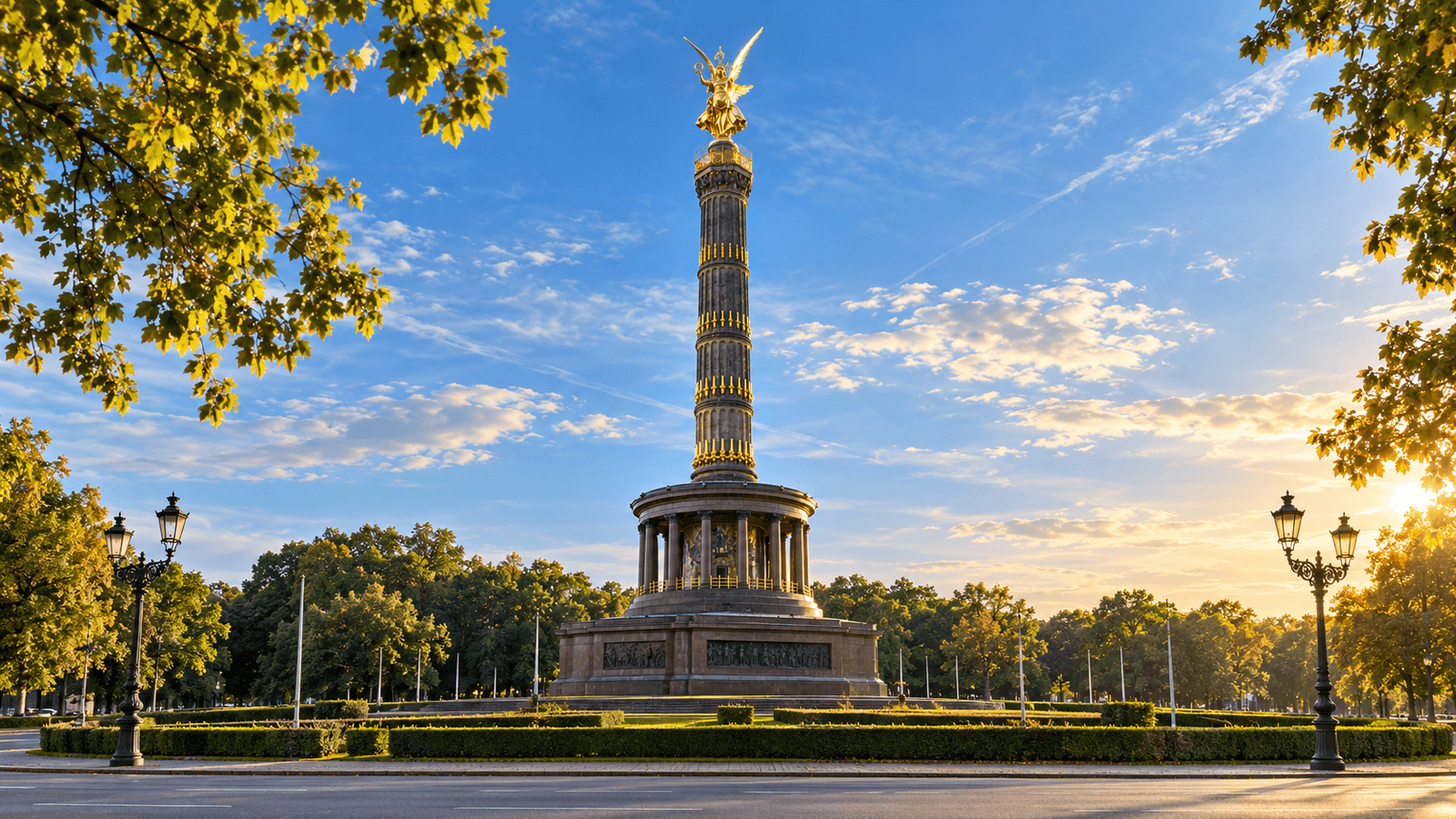
Berlin’s Siegessäule, or Victory Column, is one of the German capital’s most recognisable monuments: a monumental column crowned by a gilded winged Victoria at Großer Stern in Tiergarten. Yet it was not originally built here. Its present appearance brings together nineteenth-century wars, German unification, monumental art and dramatic changes to Berlin’s urban landscape.
What exactly is Berlin’s Victory Column?
The column was initially conceived to commemorate Prussia’s victory over Denmark in 1864. While it was being built, Prussia also defeated Austria in 1866 and France in 1870-1871. The monument therefore developed into a broader celebration of the military victories associated with German unification.
It was inaugurated in 1873. The column’s drums and gilded decoration lead the eye upwards to its defining feature: Victoria, the Roman goddess of victory.
Who is the golden woman at the top?
The winged figure is Victoria, the Roman counterpart of the Greek Nike. Berliners popularly call her Goldelse. Sculptor Friedrich Drake created the statue, whose laurel wreath, wings and triumphant pose make its allegorical purpose immediately clear.
Victoria is more than a classical reference. Her imagery also reflects the political identity of nineteenth-century Prussia and Germany. Stone, bronze and gold were used to express how a state wished to represent itself to the public.
Why is the column in the middle of Tiergarten?
The Victory Column was not built at Großer Stern. Its original location was Königsplatz, near the Reichstag.
During the major urban planning interventions of the National Socialist period, it was moved to its current location in 1938-1939. The monument was also altered and heightened. Consequently, the structure visitors see today is not identical to the one inaugurated in 1873.
The relocation nevertheless created one of Berlin’s most powerful urban vistas. Major avenues through Tiergarten converge on the monument, making it visible from far away.
What do the reliefs and mosaics show?
Looking only at the golden statue means missing much of the story. The base contains reliefs connected with the wars commemorated by the monument, while the interior of the lower structure includes an elaborate historical and allegorical mosaic.
Military events, historical figures and symbolic characters are woven together. This was characteristic of nineteenth-century monumental art: history was presented not as a neutral chronology but as a visual narrative of victory, unity and national power.
Seen close up, the monument is far richer than it appears from the avenue. Mosaics, columns, reliefs and gilded details reward a slower visit.
Why are there female figures on a military monument?
Victoria personifies victory, while Germania personifies Germany. They are not portraits of specific women but allegorical figures, part of a long European artistic tradition of representing abstract political ideas as human characters.
Germania became especially prominent in nineteenth-century imagery of the German nation. These figures make the Victory Column a valuable document of the political and artistic language of its era rather than simply an attractive landmark.
Is it worth climbing the Victory Column?
Yes, particularly if you want to understand the monument’s relationship with Berlin. The viewing platform reveals Tiergarten and the radial geometry of Großer Stern from above.
Reaching it involves a substantial number of stairs, so visitors should check current opening conditions and official hours before going. For exterior photography, morning or late-afternoon side light can make the gilded elements particularly striking.
What makes the Siegessäule special in Berlin?
Few Berlin monuments contain so many historical layers in a single structure. It began as a military commemoration, became associated with German unification, was relocated during the Nazi period and is now part of a modern city with a radically different identity from the one that created it.
Its reliefs, mosaics, architectural changes and golden Victoria make it possible to read almost a century and a half of changing interpretations of German history.
After Berlin, why not slow down in Lloret de Mar?
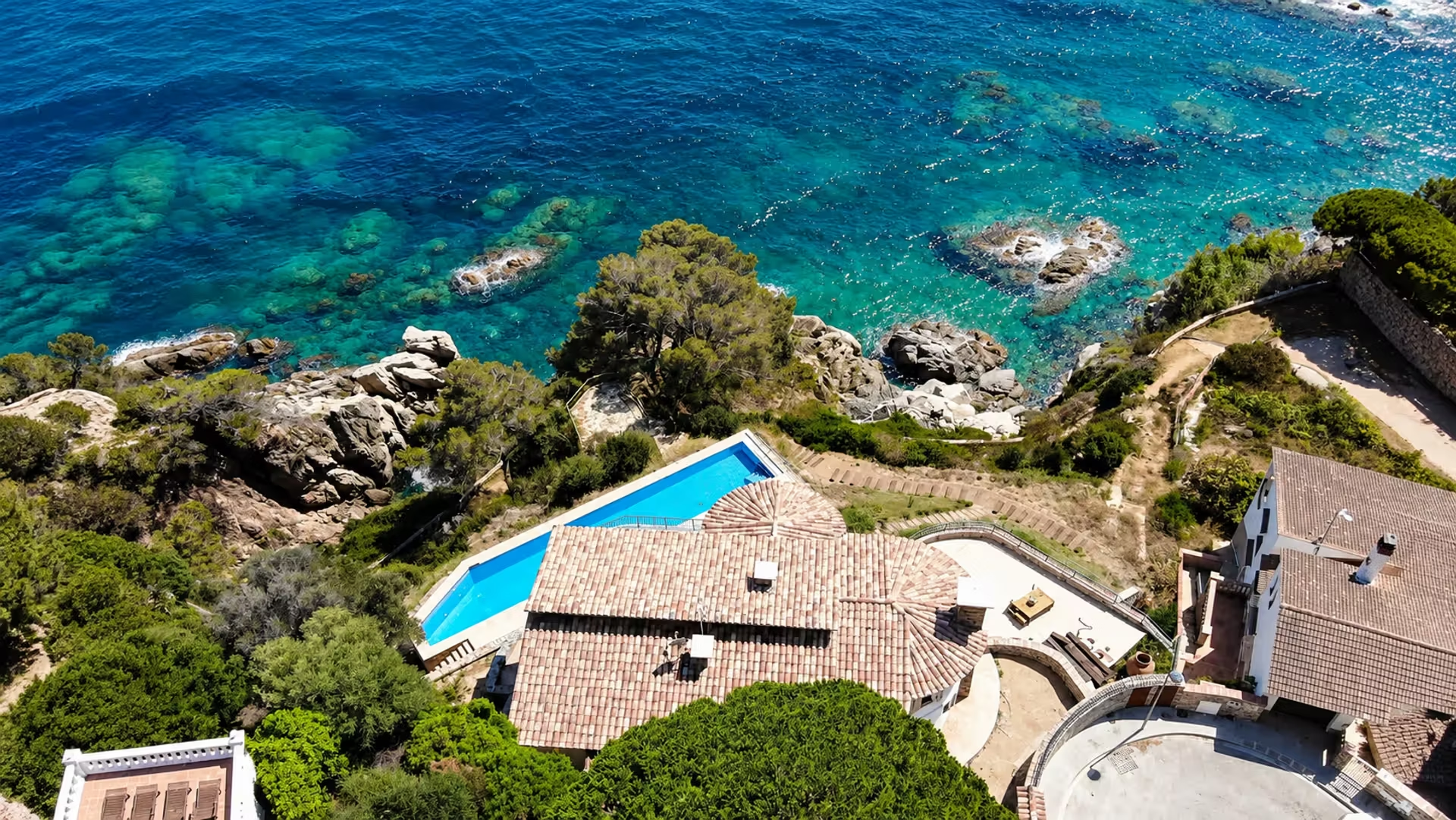
A European cultural trip can pair an intense capital like Berlin with a few days by the Mediterranean. Lloret de Mar, on the Costa Brava, offers beaches, coastal paths, Modernista heritage and the freedom of staying in an apartment, house or villa.
After Tiergarten’s grand avenues, explore our properties in Lloret de Mar, browse homes in Tossa de Mar, or compare them with properties in Blanes.
At AllCostaBrava, we select properties for travellers who want to enjoy the region at their own pace and for people considering a future home on the Costa Brava. Berlin and the Mediterranean make a surprisingly rewarding combination.
Frequently asked questions
What does Siegessäule mean?
It literally means “Victory Column” in German.
Who is the golden statue?
She is Victoria, the Roman goddess of victory, popularly nicknamed Goldelse in Berlin.
Has the column always stood in Tiergarten?
No. It originally stood at Königsplatz and was moved to Großer Stern in 1938-1939.
Can you climb the Victory Column?
Yes, the viewing platform is normally reached by stairs; check official opening hours and access conditions before visiting.