Burg Giebichenstein in Halle: a route through the medieval fortress
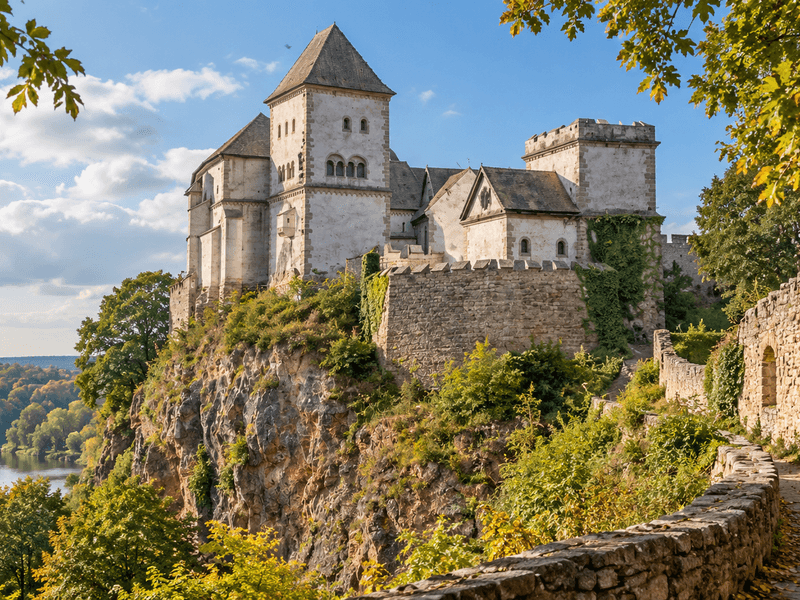
Burg Giebichenstein is one of Halle (Saale)’s most rewarding historic sites: a fortress documented since the 10th century, standing on a rocky height above the river. In this new “Castles of Germany” feature, we take a practical route through the ruins, explain how the landscape shaped the castle’s defences and continue into the surrounding Giebichenstein district.
Why was the castle built above the Saale?
Its position explains much of its history. The rocky elevation provides broad views across the valley and river. In the Middle Ages, such terrain offered a major strategic advantage for monitoring movement and protecting approaches.
Giebichenstein is mentioned in written sources in 961. The complex evolved over centuries rather than being built as one finished structure, so today’s remains represent different periods and changing needs.
What is the Oberburg and what survives today?
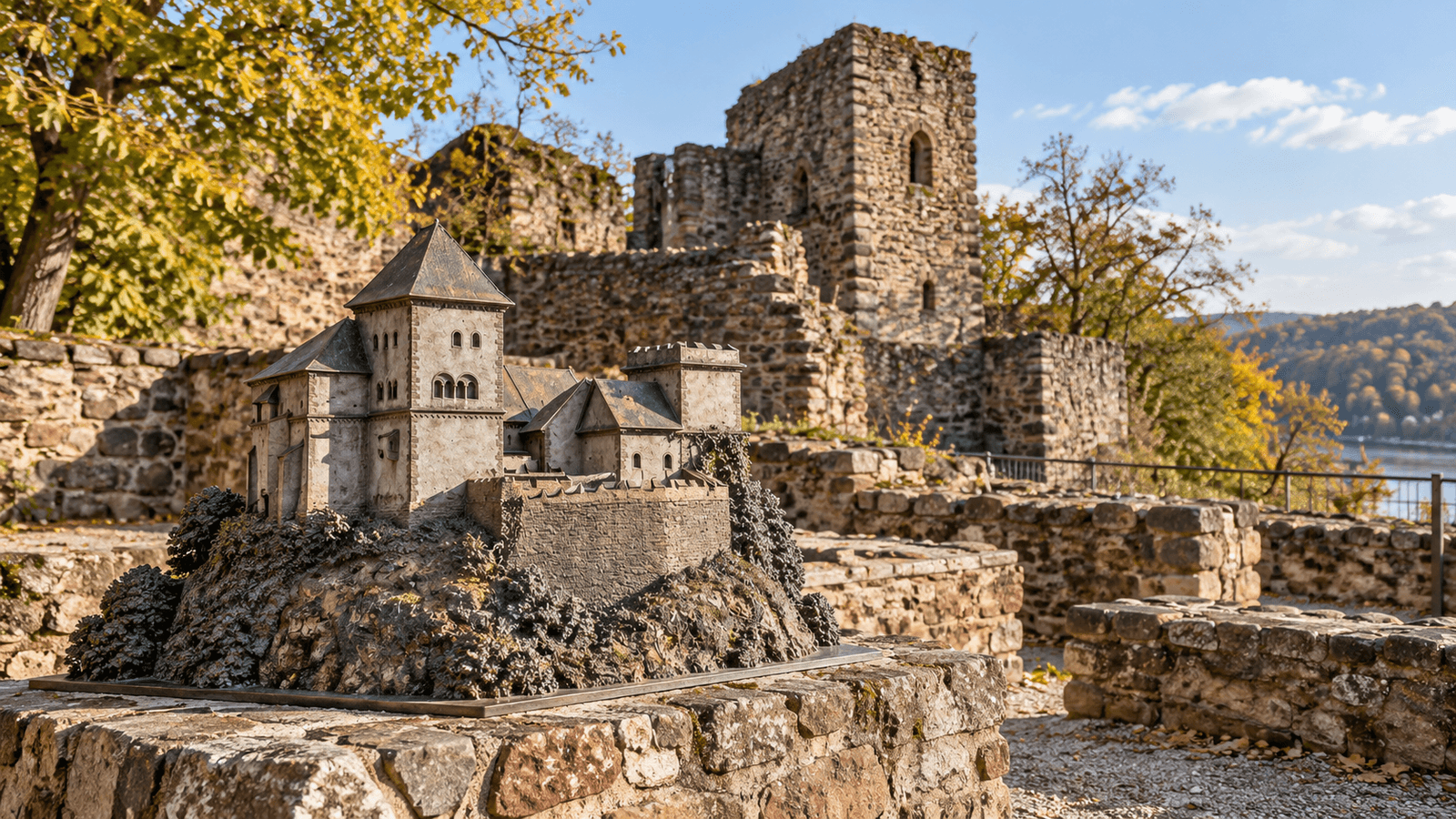
The Oberburg, or Upper Castle, occupies the higher section and contains the clearest medieval remains. Visitors can see walls, foundations and defensive structures. Archaeological work is essential for understanding buildings that have disappeared.
Interpretive reconstructions should not be read as exact pictures of the past. They are evidence-based proposals using excavated foundations, surviving materials, known building techniques and comparisons with contemporary castles.
How can archaeology reconstruct vanished buildings?
Where plans and reliable historic images do not survive, archaeologists work from physical traces. Foundation dimensions, wall positions and construction materials can reveal the likely organisation of a building. Details such as roofs, windows or exact heights may require comparison with similar structures.
That makes Giebichenstein particularly engaging: the visitor is not simply looking at ruins but also at the modern process of understanding them.
What is the best way to explore the ruins?
Start with the terrain. The steep rock and height above the Saale were part of the defence just as much as the masonry. Then notice narrow passages, changing levels and the relationship between towers and perimeter walls. From above, the river becomes more than a scenic backdrop: it explains the strategic value of the site.
Autumn brings particularly attractive contrasts between stone and foliage. Comfortable footwear is advisable, and visitors should check current opening arrangements and temporary closures before travelling.
What connects Giebichenstein with contemporary art?
The story did not end in the Middle Ages. The Unterburg, or Lower Castle, is associated with Burg Giebichenstein University of Art and Design Halle. Medieval heritage, student life and contemporary creativity therefore coexist within a remarkably compact area.
What else can you see around Giebichenstein?
A castle visit combines naturally with a walk beside the Saale and through the surrounding neighbourhood. Bridges, greenery and historic architecture can turn the fortress into the starting point for several relaxed hours in northern Halle.
AllCostaBrava’s “Castles of Germany” series looks beyond the most obvious tourist circuit. Giebichenstein deserves a place in it because archaeology, landscape and a living city remain closely connected here.
Planning a Mediterranean break after Germany?
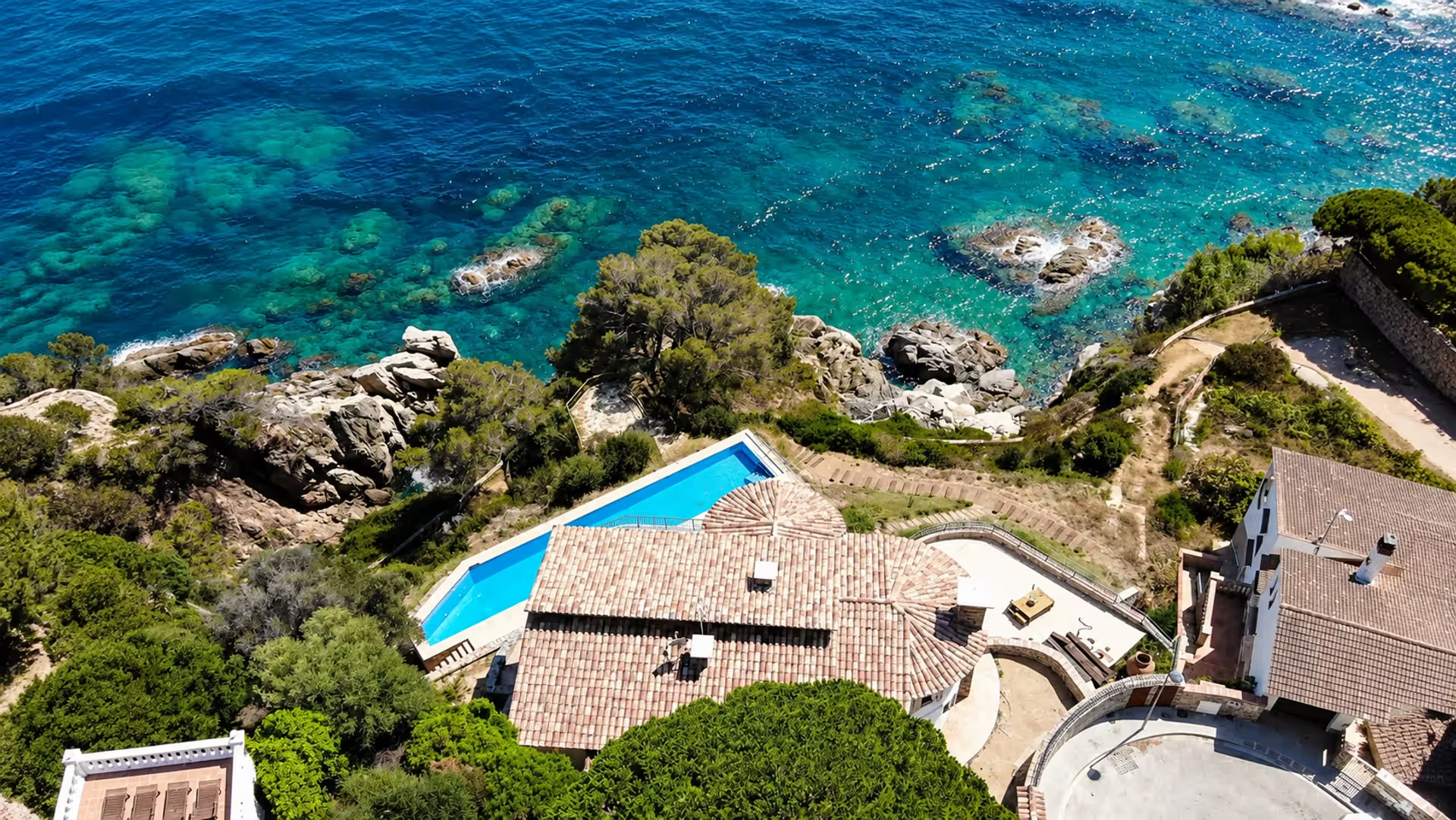
If your next journey leads to Catalonia, browse our Lloret de Mar rentals and properties. You can also compare options in Tossa de Mar and Blanes.
AllCostaBrava can help you choose accommodation or a property on the Costa Brava that suits your plans.
Frequently asked questions
Where is Burg Giebichenstein?
It is in Halle (Saale), Saxony-Anhalt, on a height overlooking the Saale River.
How old is the castle?
Giebichenstein is documented in 961, although the complex includes later phases and alterations.
Can I combine the castle with a walk?
Yes. The riverside and Giebichenstein neighbourhood make an excellent continuation on foot.
Where can I find rentals in Lloret de Mar?
Browse AllCostaBrava’s Lloret de Mar property selection.