Traffic rules affecting drivers and personal-mobility users have changed in Spain in 2026. The most visible change since 1 January is the connected V-16 warning beacon, which replaces warning triangles for a stopped vehicle. Regulatory reforms have also focused on improving protection for pedestrians, cyclists and motorcyclists. Here is a short guide for Costa Brava residents and visitors.
What has changed with the V-16 beacon?
Since 1 January 2026, the connected V-16 is the legal device used to signal an immobilised vehicle in Spain. It must be an approved model connected to the DGT 3.0 platform.
The practical advantage is significant: it can be placed on the highest possible part of the vehicle without walking into the road to position warning triangles. Once activated, it anonymously communicates the location of the stranded vehicle.
In short: check that the V-16 carried in your car appears on the DGT list of certified models.
What about e-scooters and other personal mobility vehicles?
Personal mobility vehicles (VMP in Spanish), a category that includes many electric scooters, are subject to specific technical and circulation requirements. Models sold from 22 January 2024 must have certification under the DGT technical manual; earlier models may continue to circulate until 22 January 2027 under the transitional rules.
In tourist areas such as Lloret de Mar, Blanes and Tossa de Mar, check the local bylaw too. Municipal rules can specify where scooters may be ridden or parked.
Are there new rules for emergency vehicles?
Yes. A reform of Spain’s General Traffic Regulations approved in 2025 strengthened the emergency corridor rule. In congestion on motorways and dual carriageways, drivers must make room for ambulances, fire engines and other priority vehicles.
The practical principle is simple: do not wait until an ambulance is trapped behind you. Stay alert, create space and follow police instructions and road signs.
What changes matter to cyclists and motorcyclists?
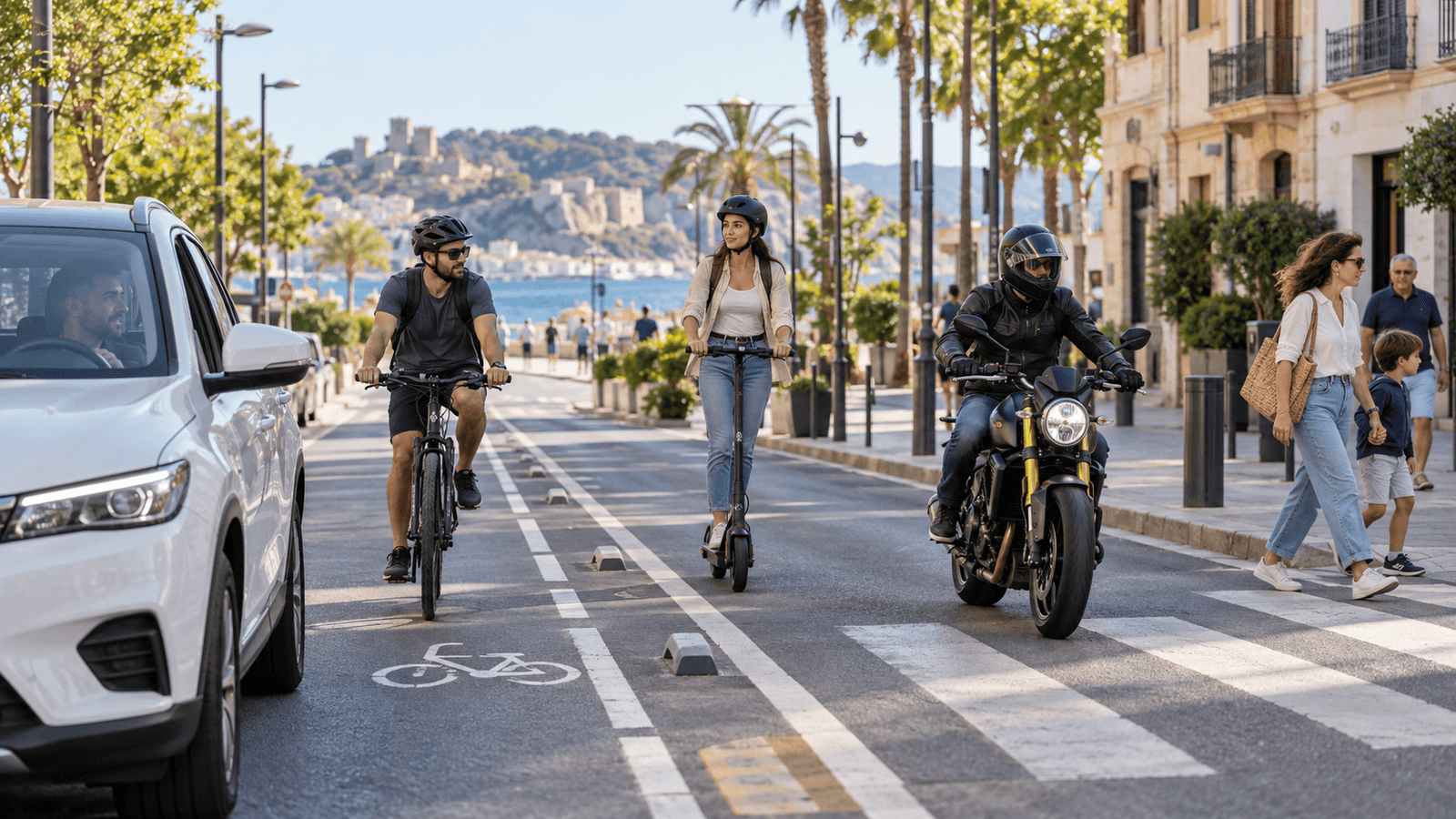
Regulatory changes in 2026 have aimed to strengthen protection for vulnerable road users. For car drivers, the practical rule remains particularly important: when overtaking a bicycle, leave adequate lateral distance and only complete the manoeuvre when it is safe.
Drivers should also anticipate motorcycles and bicycles on urban streets and coastal roads, where bends, tourist traffic and mixed road users demand extra attention.
What should drivers remember on the Costa Brava?
Before setting off, check three things: you have an approved connected V-16, you understand local restrictions if using an e-scooter, and you leave enough room for cyclists, motorcyclists and pedestrians.
During summer and weekends, Costa Brava roads and town approaches can bring cars, bicycles, motorcycles and pedestrians together. National rules apply, but signs and some urban restrictions are also set locally. Always pay close attention to roadside signage.
Do the rules apply to tourists driving foreign cars?
Spanish traffic rules also apply to people driving temporarily in Spain. If you are arriving from another country, check the equipment required for your vehicle and the current Spanish rules before travelling.
This is particularly useful for second-home owners whose car may remain parked for months or only be used during holidays.
Where can you check official information?
The main reference is Spain’s Directorate-General for Traffic (DGT) and, for legal texts, the Official State Gazette (BOE). Town-specific rules should also be checked with the relevant municipality.
If you are planning a longer stay or looking for a home on the Costa Brava, AllCostaBrava can also help with the local side of the move: areas, properties and the practicalities of living on the coast.
Frequently asked questions
Do warning triangles still replace the V-16 in Spain?
No. Since 1 January 2026, the connected V-16 is the legal device specified for signalling an immobilised vehicle.
Will any V-16 beacon do?
No. It must be a certified connected model meeting DGT requirements.
Can an e-scooter use any street?
Not necessarily. Riders must also follow signs and municipal bylaws.
Do Spanish traffic rules apply to tourists?
Yes. Anyone driving or riding in Spain must follow the applicable Spanish rules.