L’Escala is one of those Costa Brava towns where you arrive for the sea and somehow end up browsing property “just out of curiosity”. It combines beaches and coves, a lively waterfront, the archaeological site of Empúries, fishing traditions and neighbourhoods with very different personalities. For holidays, a second home or a more Mediterranean lifestyle, it offers history, everyday services and a generous amount of blue horizon.
What makes L’Escala different from other Costa Brava towns?
L’Escala is more than a five-minute postcard. Stay a few days and you discover a functioning town behind the seafront, with shops, restaurants, services and life beyond August.
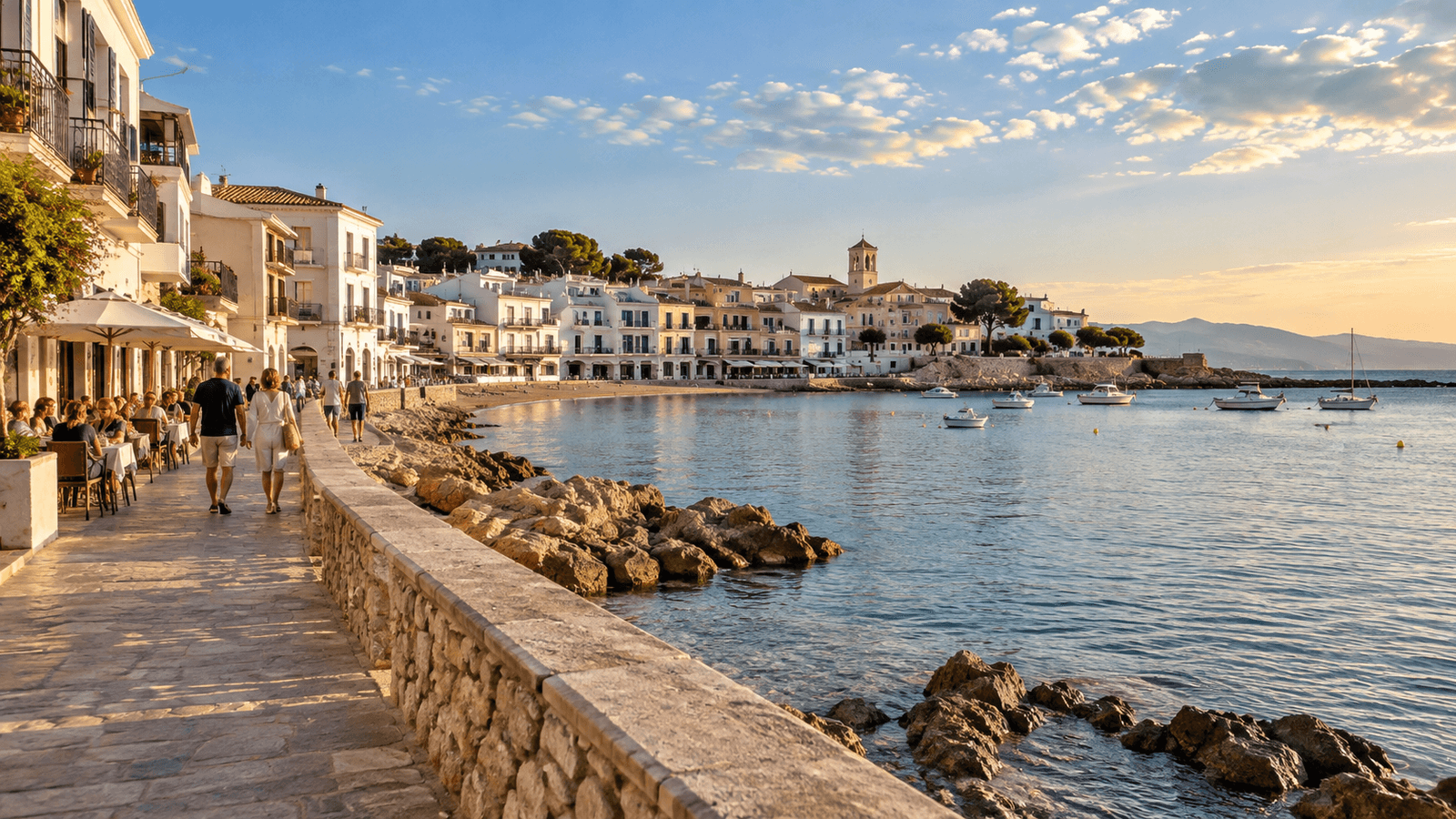
Its coastline links Cala Montgó, Port de la Clota, Riells, the old town and the shore towards Empúries and Sant Martí d’Empúries. You can change scenery without changing municipality: a cove today, archaeology tomorrow, then coffee overlooking the sea while dangerously calculating the price of owning a terrace here.
You can also compare homes in Sant Feliu de Guíxols and Playa de Aro.
What is Riells promenade like, and why is the Little Prince there?
Riells is one of L’Escala’s best-known areas, with an urban beach, promenade, restaurants and family-friendly atmosphere. Along the waterfront stands a figure inspired by Antoine de Saint-Exupéry’s Little Prince, with further references to his fictional world.
Sitting by the bay, he seems to understand a universal property rule: when you find a great sea view, don’t get up too quickly. Buyers, however, should look beyond distance to the beach and consider orientation, parking, seasonal noise, community charges and intended use.
What is the Cobla monument?
On Passeig Lluís Albert stands a striking composition of cobla musicians. A cobla is the traditional instrumental ensemble associated, among other repertoire, with the sardana, a dance deeply connected with Catalan culture.
It is a reminder that L’Escala is not simply sun and parasols. Local identity appears in music, festivals, food and the relationship with the sea. Eleven bronze musicians also make most homeowners’ association meetings look pleasantly small.
Why should you visit Empúries?
Close to town is Empúries, one of Catalonia’s major coastal archaeological sites, with remains from Greek and Roman settlements. Apparently “location, location, location” was understood here more than two thousand years ago.
A visit pairs beautifully with the coastal route towards Sant Martí d’Empúries. Heritage, sea and walkable surroundings add enjoyment for owners and appeal to the area, although no location feature can guarantee future investment returns; every property needs its own assessment.
Why are L’Escala anchovies such a local institution?
The town has a long fishing and salt-curing tradition. Anxoves de l’Escala are part of its gastronomic identity, while the Anchovy and Salt Museum explores the historic relationship between fishing, salt and the local economy.
Our food advice is easy: try them. Our property advice is equally simple: don’t buy a home solely because lunch by the sea was magnificent. Enjoy lunch first; then check the paperwork and numbers.
What is year-round life in L’Escala like?
Summer changes the rhythm, but L’Escala has services that make it more than a seasonal destination. Second-home owners can enjoy spring, autumn and winter; permanent residents should check real-life distances to shops, healthcare, schools, transport and the activities they actually use.
Riells favours waterfront access and convenience; the centre puts you near the historic core; other residential areas can offer more tranquillity and different property types. Visiting once in peak season and once outside it can teach you more than twenty listing photos.
What should you check before buying property in L’Escala?
Buy the property, not only the view. Check the building condition, orientation, damp, exposure to marine air, accessibility, parking, recurring costs and legal status.
A nota simple is an informational extract from Spain’s Land Registry showing matters including registered ownership and charges. Arras is a pre-sale deposit agreement setting conditions between buyer and seller; its legal effects depend on its wording. If tourist letting is part of the plan, verify current rules and permissions first. A tourist licence is the administrative authorisation required, where applicable, to operate a home legally as tourist accommodation.
ITP is Spain’s Property Transfer Tax, generally relevant to certain purchases of resale property. IBI is the recurring municipal property tax. Rates, reliefs and costs vary by transaction and circumstances, so figures must be checked case by case.
Can AllCostaBrava find and manage a property for you?
Yes. We can help define the right area and property type, shortlist homes, arrange viewings and support the purchase alongside the appropriate professionals. If it will be a second home or investment, we can also help with property management. A Mediterranean home should create reasons to visit, not messages asking who can let the technician in on Tuesday morning.
We do not yet have a dedicated L’Escala listings page, but we can conduct a personalised search. You can also compare homes in Tossa de Mar. Tell AllCostaBrava what you have in mind and we will help look for a property that fits your budget, plans and way of enjoying the coast.
Frequently asked questions
Is L’Escala suitable for a second home?
Yes, particularly for buyers who value the sea, walking routes, services and life beyond summer.
Which part of L’Escala is best?
It depends on priorities. Riells offers convenience and waterfront life; the centre has historic atmosphere; other residential areas can be quieter.
Can every home be used for tourist rentals?
No. Never assume so; check current regulations, the property’s status and required permissions before buying.
Can AllCostaBrava manage the home after purchase?
Yes. We can support the search and purchase and provide management solutions afterwards.