Burg Giebichenstein in Halle (Saale) brings nearly a millennium of history together on one rocky site: a fortress documented since 961, the medieval ruins of the Oberburg and an Unterburg now closely associated with one of Halle’s best-known art institutions. It is a rewarding stop for travellers looking for a quieter, historical side of Germany.
Why is Burg Giebichenstein worth visiting?
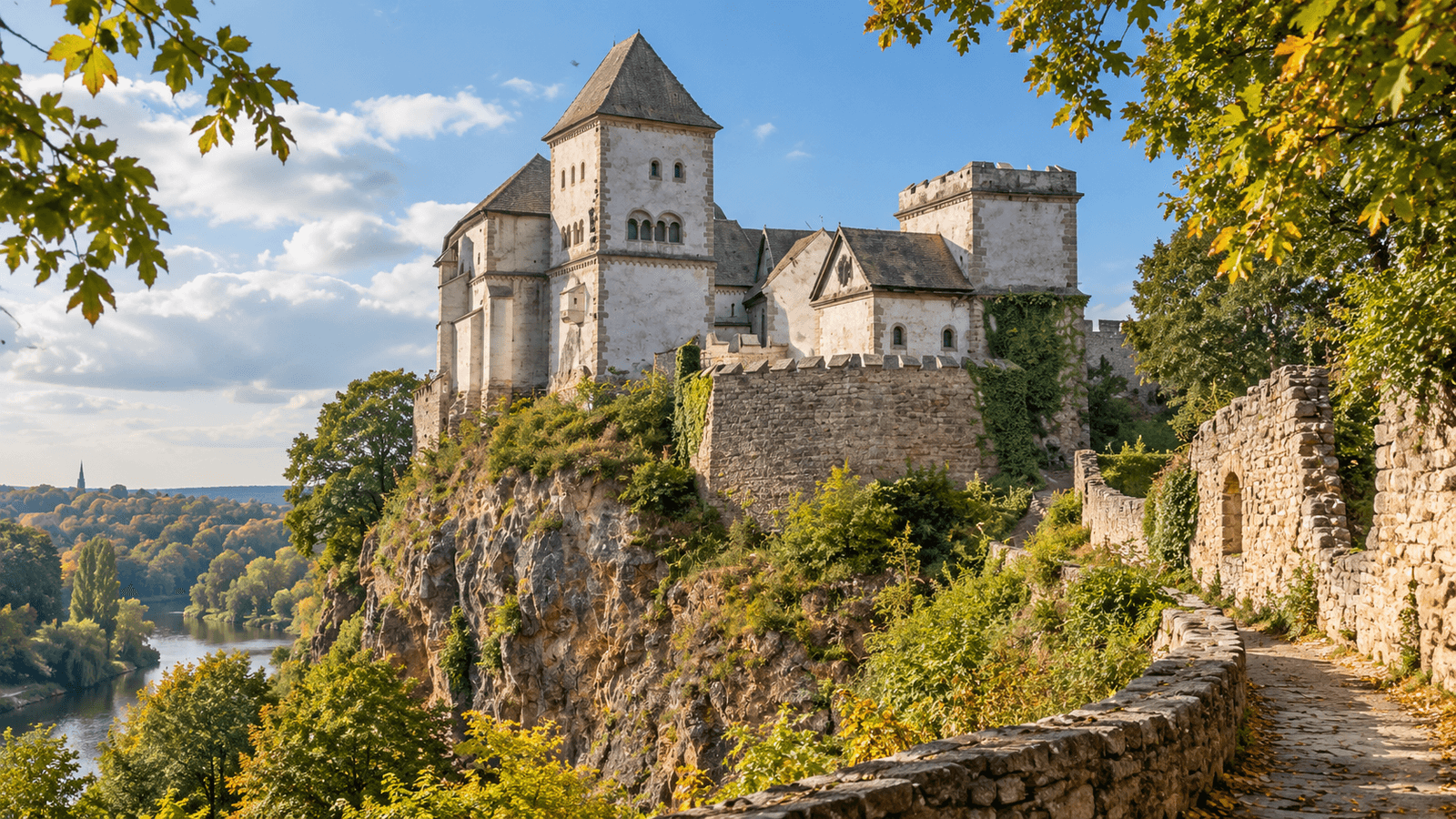
Its setting comes first. The complex overlooks the River Saale from a high rocky position. Walking around the site makes medieval defensive logic tangible: elevation, visibility and controllable approaches mattered as much as masonry.
The Oberburg, or Upper Castle, also retains the character of an archaeological site. Walls, foundations and towers invite visitors to imagine the lost volumes rather than simply walk through furnished rooms.
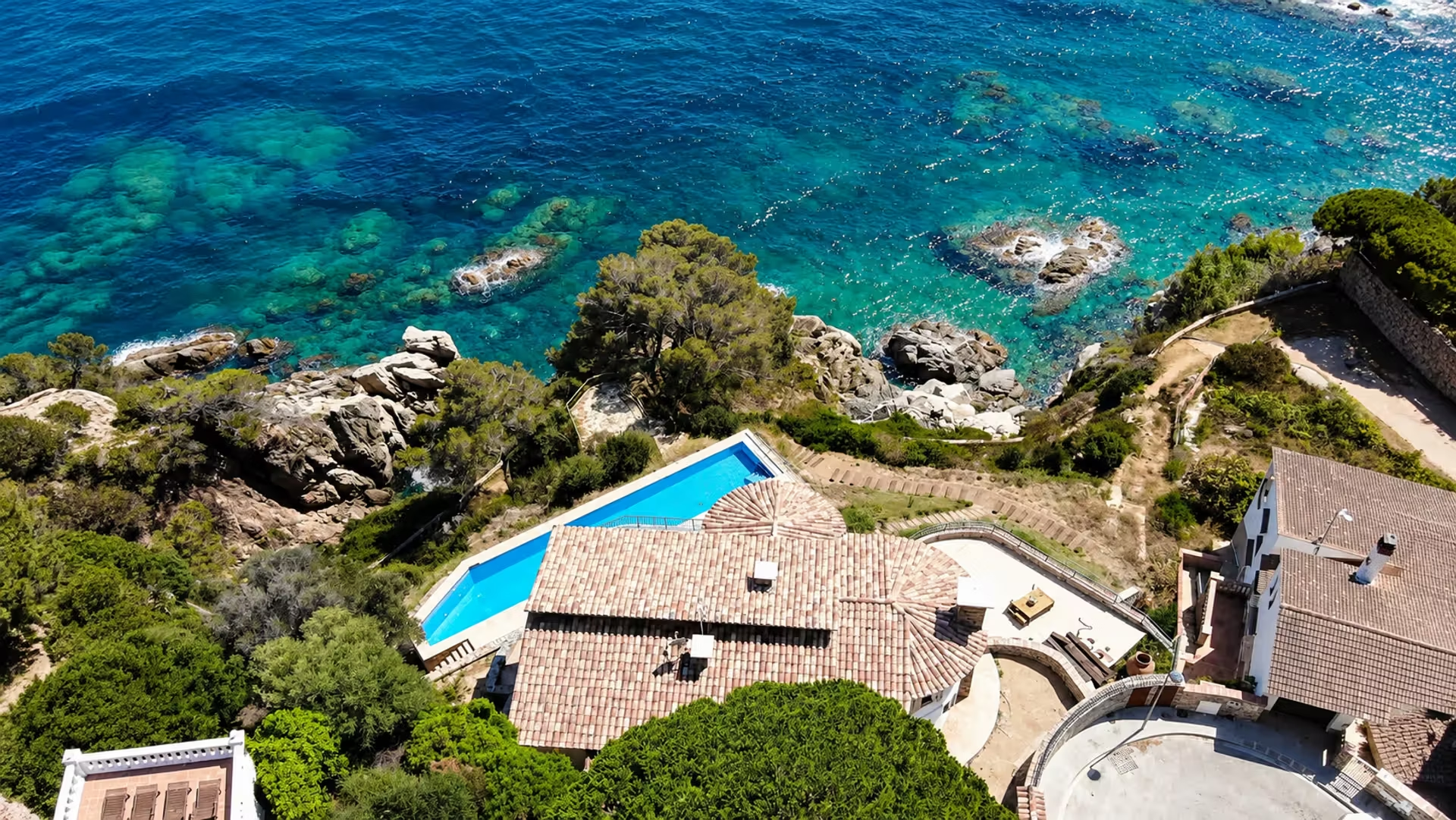
For readers more familiar with the Mediterranean architecture of Lloret de Mar, the contrast is striking: river landscape, wooded slopes, exposed rock and defensive architecture replace beaches and coastal terraces.
What do we know about the fortress since 961?
Giebichenstein is documented in 961. The site subsequently passed through different building and political phases, so what survives today does not represent one single medieval date.
Interpretation panels are particularly useful because they distinguish archaeological evidence from informed reconstruction. A panel photographed during our visit explains how excavated foundations were used to propose the appearance of an Oberburg building from the 12th-13th centuries, supplemented by comparisons with castles of a similar period.
What might the Upper Castle have looked like?
The reconstructions suggest a compact group of towers, substantial buildings and defensive elements shaped by the cliff edge. Foundations provide strong evidence for location and footprint; elevations, roofs and architectural details inevitably require more interpretation.
That distinction matters. A historical visualisation is not a photograph of the past but a reasoned hypothesis combining archaeology, architecture and comparable buildings.
What is it like to walk above the Saale?
The terrain explains what drawings cannot. Changes in level, narrow approaches and surviving walls show how geography itself formed part of the defence.
From higher points, the Saale and northern Halle become part of the experience. The river looks peaceful today, but in the medieval landscape it also represented movement, territory and something worth controlling.
How does the castle connect with contemporary art?
Giebichenstein’s story did not end in the Middle Ages. The Unterburg, or Lower Castle, is closely associated with Burg Giebichenstein University of Art and Design Halle.
That creates an unusual combination: medieval archaeology and architecture beside contemporary artistic education. The castle is not isolated from city life; it remains part of a neighbourhood producing culture today.
How should you plan a visit to Giebichenstein?
Allow time for the surroundings rather than treating the ruins as a quick monument stop. A natural route combines the Oberburg, the historic Giebichenstein neighbourhood and a walk by the Saale. Opening conditions can vary with season and events, so check official information before travelling.
Our new travel series broadens the AllCostaBrava perspective beyond the Mediterranean while keeping an eye on architecture and ways of living. If the journey makes you miss the coast, browse homes in Lloret de Mar, Tossa de Mar or Blanes.
Why are we launching “Castles of Germany”?
Travel teaches us to read buildings and places. Climate, materials, security, trade and everyday life shaped medieval castles just as they shape towns and homes today.
Burg Giebichenstein is a fitting beginning because its impact comes from the place itself: rock, river, ruins and archaeological interpretation. If you are considering buying, selling or finding a second home on the Costa Brava, AllCostaBrava can help turn travel inspiration into a focused property search.
Frequently asked questions
Where is Burg Giebichenstein?
It is in Halle (Saale), Saxony-Anhalt, Germany, beside the River Saale.
When was Giebichenstein first documented?
Its earliest known documentary mention dates to 961.
What is the Oberburg?
It is the Upper Castle, the higher part of the fortified complex, now preserved mainly as ruins, walls and foundations.
What is the Unterburg?
It is the Lower Castle, today associated with Burg Giebichenstein University of Art and Design Halle.