The arrival of expats in Girona affects home buyers on the Costa Brava because it confirms a clear trend: international demand is no longer looking only for a summer second home, but for quality of life, connectivity, services and the possibility of living in the area all year round. For anyone buying in Lloret de Mar, Blanes, Tossa de Mar, Playa de Aro or Sant Feliu de Guíxols, this means more competition for well-located homes, greater attention to the legal and technical condition of the property, and less room to improvise a purchase without local guidance.
A recent report on Girona highlighted the arrival of high-income foreign residents, especially professionals, cyclists, digital nomads and European families who choose the province for its climate, landscape, safety and proximity to Barcelona and France. Although the story focuses on Girona city, the effect does not stop in the Barri Vell: it extends towards the Costa Brava, where many buyers compare price, lifestyle and future value before making a decision.
Why do expats look at Girona and then compare it with the Costa Brava?
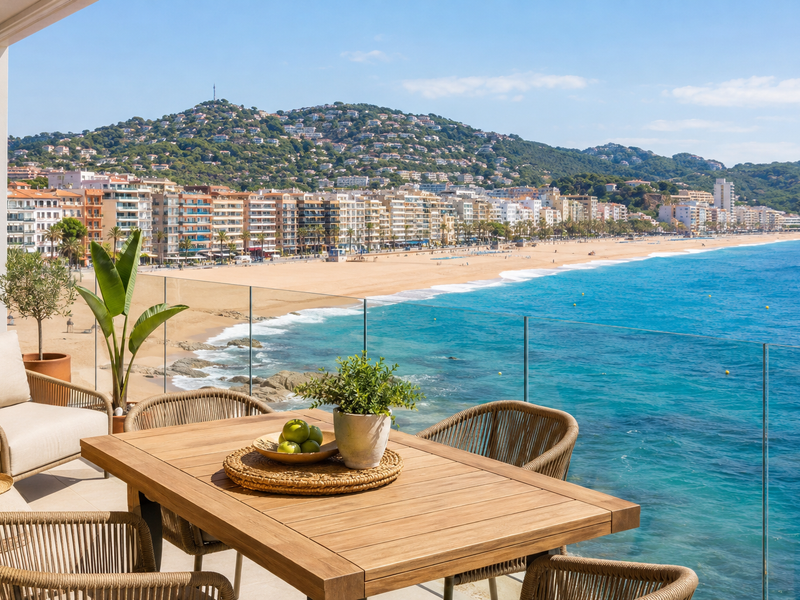
Expats look at Girona because it combines a historic city, a nearby airport, high-speed rail, schools, gastronomy and a growing international community. But many then compare it with the Costa Brava because they find the sea, homes with terraces, houses with gardens and towns more suited to second homes or Mediterranean living.
In real estate terms, an expat is a foreign person who lives in a stable or semi-stable way outside their country of origin. They are not always tourists or pure investors. They may be a family wanting to school their children in Catalonia, a remote worker, a European retiree or a buyer combining personal use with legally permitted rental. This distinction matters: year-round residents value heating, insulation, fibre internet, parking, a well-managed building community, medical services and shops open in winter.
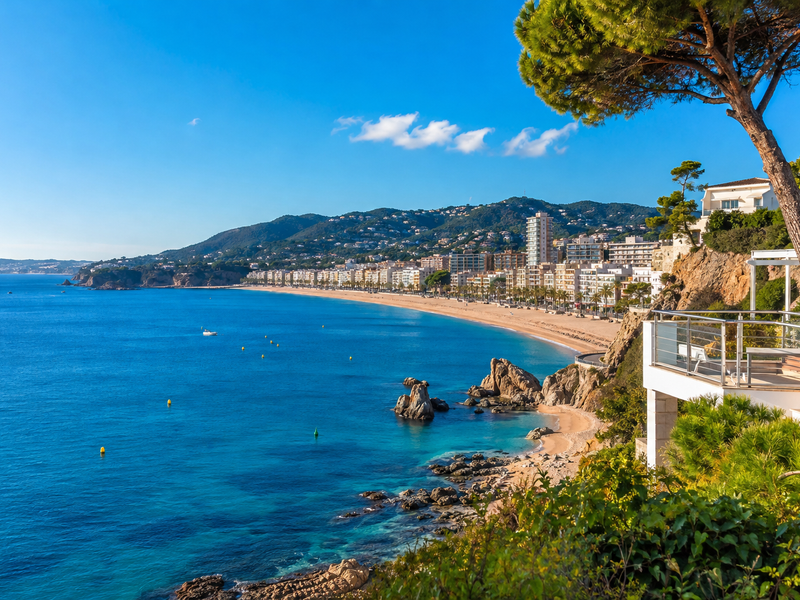
The southern Costa Brava fits this search especially well. Buying property in Lloret de Mar offers a mix of beach, services, varied supply and prices below the ultra-premium areas of the Empordà. See properties in Blanes attracts buyers who want a train station, local life and practical links with Barcelona. Houses and apartments in Tossa de Mar appeal to buyers who prioritise scenery, peace and a more exclusive image.
Are Girona property prices rising because of this demand?
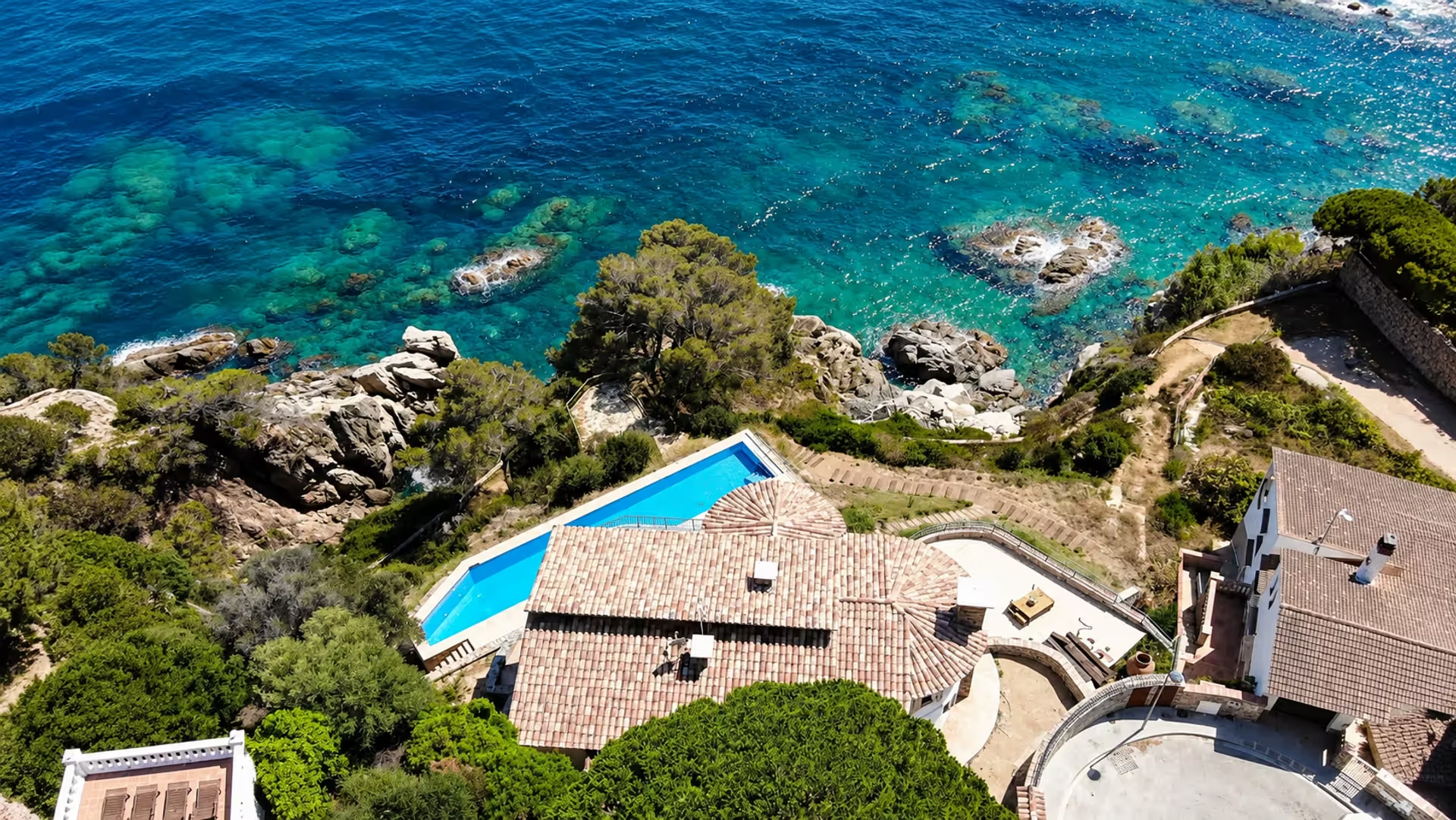
Property prices in the province of Girona show an upward trend, although not every municipality rises in the same way. Property portals place the average provincial price at around €2,700-€2,900/m² in 2026, with indicative variations depending on source, month and property type. In sought-after coastal areas, the range can be higher if the home has sea views, a tourist licence, a pool, a recent renovation or a beachfront location.
These ranges should be read as guidance, not as a valuation. A flat without a lift that needs renovation does not compete with a renovated apartment with terrace and parking, even in the same town. A detached house with a plot, good orientation and correct planning documents may attract very different demand from a similar property with registry issues or planning irregularities.
The pressure from expats and international buyers mainly affects scarce stock: move-in-ready homes, well connected, with outdoor space and reasonable community costs. Foreign buyers often pay more for legal certainty, convenience and saved time. That does not mean everything is expensive; it means good properties move quickly and require better prepared decisions.
Which Costa Brava areas may benefit most from the new international profile?
The areas most likely to benefit are those that combine year-round life, good mobility and tourist appeal without depending only on July and August. In the southern Costa Brava, Lloret de Mar, Blanes and Tossa de Mar have different but complementary profiles.
Lloret de Mar stands out for its supply volume, services, restaurants, beaches and very different neighbourhoods. For an international buyer, looking for an apartment near Fenals is not the same as looking for a house in a quiet urbanisation or a central home for year-round living. The analysis should include transport, slopes, orientation, community fees and ease of maintenance.
Blanes works as the gateway to the Costa Brava. Its train station, local shops and more residential life attract buyers who want less seasonality. For families or permanent residents, Blanes is often a logical option when the priority is to live near the sea without giving up daily connections.
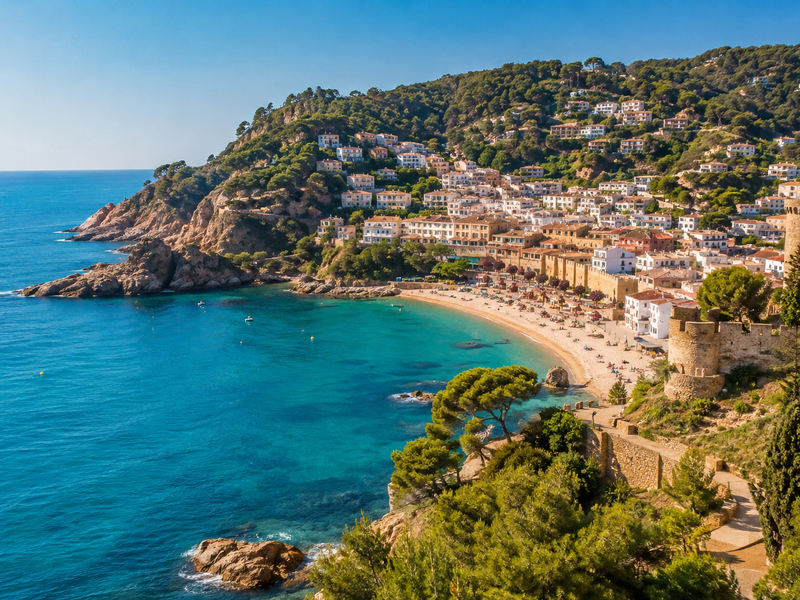
Tossa de Mar offers a different property story: landscape, old town, coves and a less urban feeling. This profile appeals to buyers who value uniqueness and privacy. The trade-off is that supply may be more limited, and access, parking, regulations and maintenance of hillside homes should be checked carefully.
Playa de Aro and Sant Feliu de Guíxols may also capture international demand. Playa de Aro has shopping, leisure and an established tourist brand. Sant Feliu de Guíxols offers a harbour, seafront promenade, heritage and an interesting balance between permanent residence and second-home use.
What should a foreign buyer check before reserving a property?
A foreign buyer should check their NIE, financing, taxes, land registry status, charges, building community, planning regulations and post-purchase costs before reserving a property. The NIE is the Foreign Identity Number: it is needed to buy, sign before a notary, pay taxes and contract utilities.
In Catalonia, the main tax on a resale property is ITP, the Property Transfer Tax. As an indicative figure, it is often around 10% in many transactions, although it can vary according to price, buyer profile or current rules. For new-build property, the buyer pays VAT and Stamp Duty, not ITP. That is why it is important to separate new and resale property from the first budget.
Municipal capital gains tax is another key concept. It is a local tax on the increase in value of urban land and is normally paid by the seller, although it should be reviewed in the negotiation and deed. It is also advisable to check IBI, the annual municipal property tax, and community fees if the home belongs to a building or urbanisation.
A reservation should not be signed on impulse alone. Before paying a significant deposit, buyers should confirm that the property description matches the Land Registry and Cadastre, that there are no hidden charges, that major renovations are justified and that the property can be sold without inheritance, mortgage or embargo blocks.
Should buyers act now or wait if international demand keeps growing?
Buying now makes sense if a property appears that fits location, documentation, condition and total budget. Waiting can be reasonable if the buyer is unsure about the area, needs financing or has not calculated taxes and renovations. The key is not to guess the perfect month, but to avoid a bad purchase.
In coastal markets with limited supply, broad price falls are less common than specific price adjustments. A seller in a hurry may negotiate, a poorly presented home may offer an opportunity and a property needing renovation may have room for negotiation. But well-located homes with terraces, views, parking or potential tourist-licence value often hold up better.
For international buyers, the cost of making a mistake is often higher than a small price difference. A problem with planning rules, damp, access, community costs or taxation can turn an attractive purchase into a headache. That is why buyers should compare towns, visit at different times and request a local review before signing.
How can a local agency help in this new scenario?
A local agency helps because it knows micro-areas, real closing prices, buildings with good reputations, urbanisations with recurring issues and the differences between living in summer and living all year round. On the Costa Brava, two homes ten minutes apart can belong to completely different markets.
AllCostaBrava works from Lloret de Mar with a local view of the southern Costa Brava. This makes it possible to filter opportunities according to real use: main residence, family second home, long-term asset investment or a purchase that combines personal stays and rental when legally viable. The goal is not only to show properties, but to reduce uncertainty.
Good support also translates the purchase into the foreign buyer’s language: which documents to request, which costs to calculate, which timelines are normal, which deposits to avoid and when it is worth negotiating. In a market with more international demand, that information is as valuable as finding the property.
Frequently asked questions
Does the arrival of expats make the whole Costa Brava more expensive?
Not all of the Costa Brava becomes more expensive in the same way. Pressure is felt most in move-in-ready homes with good locations, terraces, views or year-round services.
What is the NIE and why do I need it to buy?
The NIE is the Foreign Identity Number. You need it to buy a property in Spain, sign before a notary, pay taxes and contract services.
How much should I add to the purchase price?
As guidance, for resale property in Catalonia it is sensible to budget around 12-14% extra for taxes and costs. For new-build property, the calculation changes because VAT and Stamp Duty apply.
Which area is best for year-round living?
It depends on lifestyle. Lloret de Mar offers services and broad supply, Blanes adds connections and local life, and Tossa de Mar prioritises scenery and calm.
If you are considering buying on the Costa Brava in 2026, AllCostaBrava can help you compare areas, review real opportunities and prepare a safe purchase from the first contact.